
How to sell a home in Spain: steps, costs and documents you need
Selling a home in Spain? Learn how to price it, which documents you need, what costs and taxes to pay and how to close the sale step by step.
26 Oct 2026 · 20 min read · Huspy Team
Selling a home is an important decision that requires planning. Knowing what your property is worth, finding the right buyer, preparing all the paperwork and understanding the taxes you will have to pay are just some of the things to consider before closing the deal.
Although selling a home can seem complicated, understanding each stage will help you make better decisions, avoid unwelcome surprises and ensure the sale goes ahead with the greatest possible safeguards.
If you are thinking of selling your home, this guide explains how to sell a property in Spain step by step: from pricing it and preparing it for the market to negotiating with buyers, signing the deposit contract (contrato de arras) and completing the title deed (escritura pública) before a notary.
What do you need to sell a home in Spain?
Before putting your home on the market, it is important to get a few basics in place to make the process smoother.
As the owner, you will need to:
- Prove that you own the property: with your title deed or another valid deed of acquisition.
- Know the property's market value: so you can set a competitive and realistic asking price.
- Prepare the documents: such as the Energy Performance Certificate (certificado energético), the Land Registry information and receipts for certain costs.
- Check the property's legal status: find out whether there are any mortgages, seizures, charges or outstanding debts.
- Get the property ready for viewings: present it well and highlight its main features.
- Understand the costs and taxes of the sale: so you can work out how much money you will actually receive once the transaction is complete.
Having these points ready before you list the property can save you time and give potential buyers more confidence.
How to sell a home in Spain, step by step
Selling a home involves several stages. From the moment you decide to sell until you hand over the keys, you will need to make a number of decisions and complete some formalities.
These are the main steps to selling a home in Spain.
1. Find out what your home is worth
One of the first steps in selling a home is establishing its market price.
Setting the right price is essential. If it is too high, you may attract fewer interested buyers and the sale may take longer. If it is too low, you could lose out on part of your property's value.
But how do you know what your home is worth?
To value a property, you need to look at several factors:
- Location: the neighbourhood, the town or city and proximity to amenities, public transport, schools and shops.
- Size: the built and usable floor area in square metres.
- Layout: number of bedrooms, bathrooms, terraces and communal areas.
- Condition: whether it needs renovating or is ready to move into.
- Building features: age, lift, communal areas, parking and accessibility.
- Orientation and natural light: factors that can influence how appealing the property is.
- Local demand: buyer interest and the supply of similar homes in the area.
It is also important to compare your property with others on the market in the same area. However, bear in mind that the asking price does not always match the final sale price.
How can you find out the market price of your home?
There are several tools and methods:
- Checking the prices of similar homes on property portals.
- Analysing comparable sales where reliable data is available.
- Using online property valuation tools.
- Requesting a professional valuation from an estate agent.
A professional valuation takes into account the specific features of the property and how the local market is performing, so you can set the right pricing strategy.
2. Prepare your home before putting it on the market
Once you have an idea of the price, it is time to get your home ready for potential buyers.
First impressions count. Before viewing a property, many people have already formed an opinion from the photos and videos in the listing.
That is why presenting your home attractively can help it stand out from similar properties.
Major renovations are not always necessary. In many cases, small changes can significantly improve how the property is perceived.
What can you do to prepare your home for sale?
Declutter and depersonalise the space
Remove personal items, photos, excessive decorations and furniture that gets in the way. The aim is for buyers to be able to picture themselves living there.
Pay attention to cleanliness and lighting
A clean, tidy and bright home makes a better impression. Make the most of natural light, open the blinds and use suitable lighting in darker rooms.
Carry out minor repairs
Fix dripping taps, doors that do not close properly, damaged sockets and other small defects. These details can influence the overall impression of the property.
Prepare the outdoor spaces
If you have a terrace, balcony, garden or patio, do not forget to get them ready. These spaces can add a great deal of value to the way the property is presented.
Consider home staging
Home staging means preparing and styling a property to make it more appealing to potential buyers. It can include rearranging furniture, decoration, lighting or minor cosmetic touches.
It is not about hiding defects, but about showing the property's potential and making it stand out in the market.
3. Gather the documents you need to sell a home
Before listing your home and, above all, before the signing, it is important to have the necessary documents ready.
Although some documents may vary depending on the autonomous community (region), the type of property and the details of the transaction, these are the most common:
Title deed
This is the document that shows how you acquired the property and confirms who owns it.
It may be a deed of sale, a deed of acceptance of inheritance, a gift deed or another valid title.
Land Registry extract (nota simple) from the Land Registry (Registro de la Propiedad)
This shows who the registered owner is and whether there are any mortgages, seizures, charges or other restrictions on the property.
It is advisable to request an up-to-date nota simple before you start marketing the property.
Energy Performance Certificate
This document provides information on the property's energy consumption and CO₂ emissions.
As a general rule, you must have a registered Energy Performance Certificate and display the energy rating in any sale advertising, subject to the exceptions set out in the regulations.
Latest property tax (IBI) receipt
Property tax (IBI, Impuesto sobre Bienes Inmuebles) is a municipal tax levied on the ownership of certain rights over real estate.
The latest receipt helps identify details of the property and confirm its payment status.
Certificate confirming you are up to date with payments to the owners' association (comunidad de propietarios)
If the property belongs to an owners' association, you will need to provide a certificate stating any debts owed to the association at the time of transfer, unless the buyer expressly waives this requirement in the terms provided by law.
Certificate of occupancy (cédula de habitabilidad)
In some autonomous communities, such as Catalonia, a valid certificate of occupancy is required for certain property transfers, subject to the exceptions set out in regional regulations.
Additional documents
Depending on the characteristics of the property, you may also be asked for:
- Cadastral reference.
- Floor plans of the property.
- Information on renovations carried out.
- Planning documents.
- Licences or occupancy documents.
- The owners' association's bylaws.
Preparing these documents in advance makes the buyer's checks easier and helps avoid delays when it is time to complete the sale.
4. List your home and create a marketing strategy
Once you have set the price and prepared the documents, it is time to put your home on the market.
Listing a property is not just about uploading a few photos and writing a description. To attract interested buyers, it is important to develop a marketing strategy that gives the property visibility.
What should a good property listing include?
Professional photos
Images are one of the most important elements of any property listing. They should show the spaces clearly, make the most of natural light and highlight the property's strengths.
A complete and appealing description
Explain the property's main features: floor area, number of bedrooms and bathrooms, layout, orientation, outdoor spaces and standout features.
You can also mention the amenities and transport links in the surrounding area.
Videos and virtual tours
Videos and virtual tours let buyers get a better sense of the layout before arranging an in-person viewing.
Promotion through the right channels
Property portals, social media and databases of interested buyers are some of the channels that can be used to promote a property.
The strategy will depend on the type of property, its location and the buyer profile you want to reach.
Working with a property professional can help you position the listing, choose the right channels and manage the interest the property generates.
5. Organise viewings and handle buyers' offers
When your home starts receiving enquiries, you reach one of the most important stages: organising viewings and handling purchase offers.
Not everyone who views a property has the same level of interest or the same financial means. That is why it is important to manage each contact in an organised way.
How should you prepare for a viewing?
Before buyers arrive:
- Air the property and make sure it is clean and tidy.
- Open the blinds to make the most of natural light.
- Get each room ready so it can be viewed comfortably.
- Have information to hand on service charges, IBI and the property's features.
- Try to make sure visitors can walk around the property without interruptions.
During the viewing, it is important to answer buyers' questions openly and provide all relevant information about the property.
What should you consider when you receive an offer?
When a buyer is interested, they may make a financial offer.
Before accepting it, do not look only at the price. It is also important to know:
- The buyer's financial capacity.
- Whether they need mortgage finance.
- The timescale in which they can complete the purchase.
- The amount they are willing to pay as a deposit.
- The terms they propose for completing the sale.
A slightly lower offer may be more attractive if the buyer has their financing in place and can complete within a suitable timeframe.
What matters is weighing up the terms as a whole and negotiating an agreement that works for both parties.
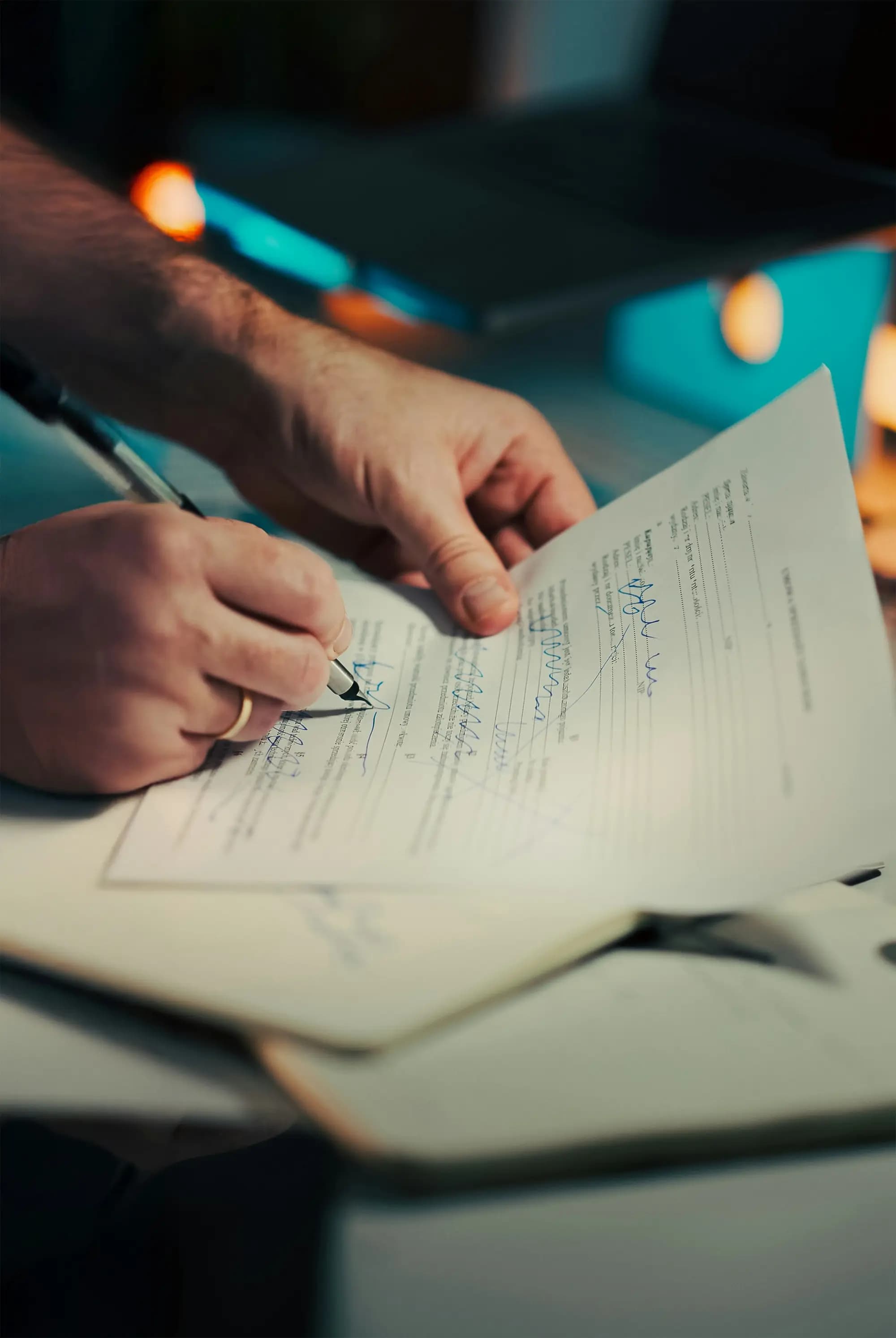
6. Sign the deposit contract (contrato de arras)
When buyer and seller reach an agreement, it is common to formalise it with a deposit contract.
This private document sets out both parties' commitment to complete the sale on the agreed terms and usually includes a payment by the buyer on account of the final price.
What information should a deposit contract include?
- Personal details of the buyer and seller.
- Identification of the property and its Land Registry details.
- Total sale price.
- Amount paid as a deposit.
- Outstanding balance.
- Deadline for signing the deed.
- Terms for handing over the property.
- Consequences of a breach.
- Any other specific terms agreed between the parties.
What happens if the buyer or seller pulls out?
It will depend on the type of arras agreed.
Penitential arras (arras penitenciales), governed by Article 1454 of the Spanish Civil Code, allow the parties to withdraw from the contract on the terms provided by law: the buyer forfeits the deposit paid and the seller must return double the amount.
However, it is important to remember that not all deposit contracts are penitential. There are other types with different legal consequences.
That is why, before signing, it is worth reviewing the document carefully and checking that it accurately reflects the terms of the transaction.
7. Prepare the documents for the deed of sale
Once the deposit contract has been signed, preparations for the signing before the notary begin.
At this stage, the seller must make sure all the documents are in order and that any outstanding issues relating to the property have been resolved.
Points worth checking include:
- That the registered owner matches the person selling.
- That any charges and mortgages have been identified.
- That the documents needed to cancel the relevant charges have been prepared.
- That the Energy Performance Certificate is available.
- That the owners' association debt certificate can be provided, where applicable.
- That information on the IBI and the cadastral reference is available.
- That the payment and key handover terms are clear.
What if the property still has a mortgage?
You do not need to have paid off your mortgage to be able to sell your home.
If there is an outstanding mortgage, you will need to coordinate with the bank on repaying the debt and, where applicable, removing the mortgage from the Land Registry.
The outstanding amount can be deducted from the sale price and used to settle the loan, provided the transaction is properly organised.
It is important to ask the bank for details of the outstanding capital and any cancellation costs or fees.
8. Sign the title deed before a notary and hand over the keys
It is time to close the deal!
Signing the public deed of sale is the step that formalises the transfer of the property before a notary.
At this point, the notary verifies the identity and legal capacity of the parties, reviews the necessary documents and records the agreed terms in the deed.
Among other things, the following are checked:
- The identity of the buyer and seller.
- The ownership and description of the property.
- The agreed price.
- The payment methods.
- The status of any charges.
- Whether the property is let or occupied.
- The terms for handing over the property.
Once the deed has been signed and payment completed, the keys are handed over on the agreed terms.
It is advisable to keep a copy of the transaction documents and the relevant proof of payment.
What costs and taxes does a seller pay in Spain?
One of the most important things to do before selling a home is to work out how much money you will actually receive once the transaction is complete.
The sale price is not necessarily what you will walk away with, as you will need to deduct any outstanding debts, the costs of the transaction and any taxes due.
These are the main costs to bear in mind:
1. Municipal capital gains tax (plusvalía municipal)
Plusvalía municipal is the common name for the Tax on the Increase in Value of Urban Land (IIVTNU, Impuesto sobre el Incremento de Valor de los Terrenos de Naturaleza Urbana).
It is a municipal tax levied on the increase in value of urban land that becomes apparent when the property is transferred.
In sales for consideration, such as the sale of a home, the taxpayer is generally the seller.
The amount depends on factors such as:
- The cadastral value of the land.
- The time elapsed since the property was acquired.
- The calculation method used.
- The coefficients and tax rate set by the town hall.
It is important to know that if you can prove there has been no increase in the value of the land, the tax does not apply. There are also other non-taxable situations and reliefs that are worth looking into.
2. Personal income tax (IRPF) on the capital gain
If you sell a home for more than you paid for it, you may make a capital gain that you will have to declare for personal income tax (IRPF).
The gain is not calculated simply by subtracting the price you paid for the property from the price you sell it for.
The calculation takes into account, among other things:
- The acquisition value of the property.
- The taxes and costs associated with the purchase that can be included in the calculation.
- Investments and improvements made, where they meet the tax requirements.
- The transfer value.
- The costs and taxes inherent in the sale that you have paid.
If there is a taxable capital gain, it is included in the savings tax base for IRPF and taxed at the corresponding rates.
Are there any exemptions when selling a home?
Yes. In some situations the capital gain may be exempt from tax.
For example:
- Sellers aged over 65: the gain from selling your main residence may be exempt if the legal requirements are met.
- Reinvestment in a main residence: if you sell your main residence and reinvest the proceeds in buying another main residence, you may qualify for a full or partial exemption, provided you meet the conditions and deadlines set out.
- People with severe or high-level dependency: exemptions may apply where the legal requirements are met.
Tax treatment can vary depending on the seller's personal circumstances, the type of property and their tax residence status. That is why it is advisable to consult a tax adviser before closing the deal.
3. Mortgage cancellation
If your home still has an outstanding mortgage, you will need to account for the remaining capital and any cancellation costs.
There are two separate steps:
- Financial cancellation: repaying the outstanding loan capital to the bank.
- Registry cancellation: removing the mortgage charge from the Land Registry once the debt has been paid off.
Registry cancellation may involve notary, Land Registry and gestoría fees, as well as any bank fees where these are provided for by law and agreed in the loan.
4. Estate agency fees
If you decide to sell your home through an estate agency, you will need to factor in the professional fees agreed for its services.
These may cover the property valuation, the marketing strategy, managing viewings, negotiating with buyers and support throughout the transaction.
Before appointing an agency, it is important to understand its services, fees and terms of engagement.
5. Other costs associated with the sale
Depending on the characteristics of your home and the terms agreed with the buyer, you may also have to cover:
- The Energy Performance Certificate, if you need to obtain one.
- The certificate of occupancy, where required and if it needs renewing.
- Additional certificates or documents.
- The cost of minor repairs or preparing the property.
- Certain notary fees, depending on the law and the agreed split.
- Outstanding utility bills or service charges.
How long does it take to sell a home in Spain?
There is no single timeframe for selling a home. The time needed depends on factors such as the price, location, condition and buyer demand in the area.
Some homes sell within a few weeks, while others may take several months to find the right buyer.
The factors that most influence how long a sale takes include:
- The asking price: a home priced in line with the market can attract more interest.
- The location: demand can vary considerably between cities, neighbourhoods and towns.
- The condition of the property: well-maintained, well-presented homes tend to be more appealing.
- The marketing strategy: good presentation and the right promotion can increase visibility.
- Buyer availability: the buyer's profile and financing needs also play a part.
- The documents: having everything ready can prevent delays when an interested buyer comes along.
That is why having a strategy in place from the outset is key to managing the sale properly.
Can you sell a home that still has a mortgage?
Yes. You can sell a home even if you still have a mortgage outstanding.
In this case, the process needs to be organised so that the debt is paid off and the mortgage charge can be removed from the Land Registry.
For example, if you sell your home for €250,000 and still have €80,000 left on your mortgage, part of the proceeds will go towards settling the debt with the bank.
The remainder, once the relevant costs and taxes have been deducted, is the amount you will receive as the seller.
It is important to coordinate this with the bank and the notary's office so that the cancellation is carried out correctly.
Frequently asked questions about selling a home in Spain
What documents do I need to sell my home?
The usual documents are the title deed, the Energy Performance Certificate, an up-to-date nota simple, the latest IBI receipt and the owners' association debt certificate, where applicable.
The certificate of occupancy and other documents may also be required, depending on the autonomous community and the characteristics of the property.
Do I have to pay tax if I sell my home?
It depends on the circumstances of the transaction. The main taxes a seller may have to pay are the plusvalía municipal and IRPF on the capital gain, if there is one and it is taxable.
Exemptions and non-taxable situations may apply in certain cases.
Can I sell my home if it still has a mortgage?
Yes. You can sell a mortgaged home as long as repayment of the debt and cancellation of the mortgage charge are arranged.
The outstanding capital can be paid off with part of the proceeds of the sale.
Do I have to use an estate agency to sell a home?
No. You can sell your home directly as the owner, without appointing an estate agency.
However, working with professionals can help you set the price, prepare and promote the property, manage viewings, negotiate offers and coordinate the formalities of the transaction.
Is it compulsory to sign a deposit contract?
It is not compulsory in every sale, but it is common practice to formalise the commitment between buyer and seller before going to the notary.
It is important that the contract clearly sets out the terms and the consequences of any breach.
Who pays the notary fees when selling a home?
How notary fees are split depends on the applicable regulations and what the buyer and seller agree.
Article 1455 of the Spanish Civil Code sets a general rule for the costs of executing the deed and the copies, unless otherwise agreed. In practice, the parties usually agree how to share them.
How much money will I be left with after selling my home?
It will depend on the sale price, any outstanding mortgage, taxes, estate agency fees and the other costs associated with the transaction.
To know the net amount you will receive, it is advisable to calculate all these items in advance.
Thinking of selling your home? Huspy can help you take the next step
Selling a home is about much more than posting a listing and waiting for a buyer to appear.
Knowing the true value of your property, preparing a strong marketing strategy, reaching the right buyer and managing each stage of the transaction properly can make all the difference to the final result.
At Huspy, we support you throughout the sale, helping you value your home, find interested buyers and manage every step until the deal is closed.
Want to know what your home is worth? Get in touch with Huspy and find out how we can help you sell your property.